A Pint-Sized Backstage: Reading Brighton's Gig-Night Corners
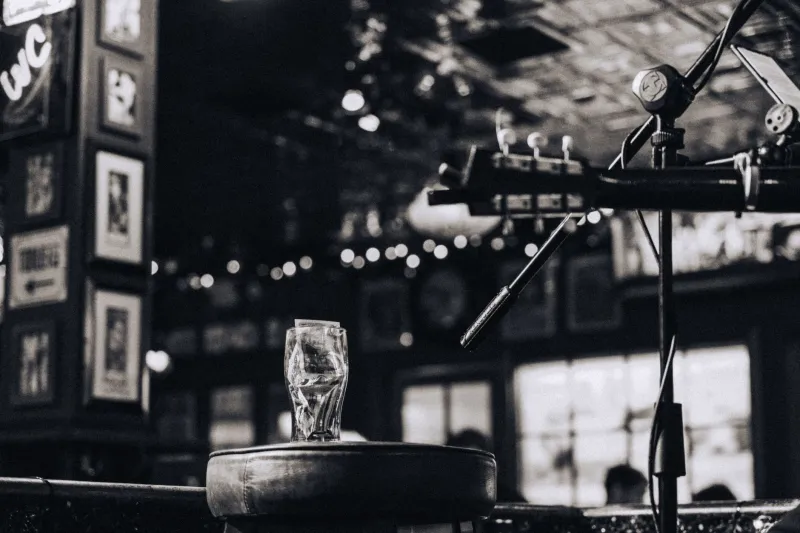
On a wet November Friday in Brighton, the real backstage is often a table for two by a radiator. The stage might be a cleared bit of floor near the window. The green room might be the snug, the bench by the fruit machine or the corner where someone has just put a guitar case upright and a pint on the windowsill. Nobody calls it a green room. It is just the corner that has been quietly requisitioned for the night.
That is the charm of a pub gig. The band is not sealed away upstairs with a rider and a laminated door sign. They are tuning up beside a couple eating pie and chips, and everyone is making it work. If you know what you are looking at, the corner becomes part of the night rather than an obstacle.
First, how to spot a corner that is about to become backstage
There are clues. A hard case leaning against a chair. A pedalboard on the floor with a coat over it. A band member crouched by a bag, doing something mysterious with a lead. A half-finished drink moved to the edge of the table to make room for a bass. The pub may have put a small reserved sign on the table, or it may simply have accepted that the corner is lost for the evening.
The other clue is timing. A corner is most likely to turn into an informal green room between soundcheck and doors, or in the twenty minutes before the first act. That is when bags come in, coats come off and someone asks the table next door if they mind a chair being borrowed. It is all very Brighton: no fuss, no barrier, just a bit of negotiation.
The five corners worth knowing
Think of these as types rather than strict addresses. Brighton has plenty of pubs where the geography shifts on a gig night, and the corner does not need a name to do the job.
1. The snug by the door
A Hanover local is the classic example. The Greys does not need a formal backstage when the snug and the nearby tables can absorb a guitar case and a couple of band members. The advantage is that the band stays close to the room. The disadvantage is that every time the door opens, someone's setlist moves.
Food order here: something you can eat with one hand and without leaning over a pedalboard. Chips, a toastie, a Scotch egg if the kitchen has them. Ask at the bar whether food is still going before the set, because the kitchen may be winding down as the amps go up. The etiquette is simple: do not take the corner table if a band is clearly circling it, and if you are already there, offer to swap rather than wait to be asked.
2. The back-room table by the radiator
The Hope & Ruin and places like it understand the value of a warm corner. Radiators attract cables, coats and people who have just come in from the seafront wind. A table near one can become a temporary tuning bay, especially if the stage is small and the band needs somewhere to put a case down.
This is the corner where you order a pie or a plate of chips and accept that the table may gain a second purpose. Keep your drink to the side. Do not put a glass on the floor near an amp. If someone asks to move your chair, say yes and take it as a compliment to your central position. Bands remember the people who made room.
3. The corner by the fruit machine
Not every pub has a fruit machine, but the principle holds: the loud, slightly awkward corner that is not quite part of the main seating plan. The Prince Albert has the sort of tight, lively geography where a corner can feel like a staging post between bar and stage. It is not quiet. It is not private. It is useful.
Eat here only if you are comfortable with a bit of theatre. A bag of crisps is fine. A full Sunday roast is not. The unwritten rule is that the band gets priority for standing room but not for your table without asking. If a guitarist is trying to do up a case while you are finishing a pint, do not film it. Just shift your glass and let them get on with it.
4. The upstairs landing table
Some Brighton venues put the gig upstairs and the food downstairs, which creates a natural green-room limbo on the landing. The Bee's Mouth is a good example of a pub where the upstairs room does the work while the downstairs keeps the plates moving. A landing table can hold a coat, a bag and a pint while someone runs back down for cutlery.
This is the corner to choose if you want to eat through a soundcheck without feeling in the way. Order before the band starts loading in. Keep to the edges. If you are dining, you have as much right to the table as anyone, but the polite move is to finish before the first act rather than during it. A toastie eaten quickly is better than a burger negotiated slowly.
5. The seaside window seat
A seafront pub corner is the most scenic green room in town, and also the most distracting. Bands tune up while the dark sea does its thing outside. Diners eat fish and chips while a bass player checks a lead. It can work beautifully, as long as everyone remembers that the window is not a cloakroom and the ledge is not a stage extension.
Order something that suits the view and the noise: fish and chips if the kitchen is on it, or a smaller plate if you are planning to stay for the set. Do not stack empty glasses on the windowsill where someone might knock them. Do not assume the band wants an audience during tuning. A nod is enough.
The unwritten etiquette of sharing a tiny backstage
The main rule is that the corner belongs to everyone and no one. A band needs somewhere to put a case; a diner needs somewhere to put a plate. Both can happen if people ask first and move second. Do not unplug anything. Do not move an amp without checking. Do not treat a musician's bag as a footrest. Do not monopolise the table with a laptop and a coat spread.
If you are eating, tell the bar you are in the corner and ask whether the kitchen is still serving through the changeover. If you are drinking, buy a pint before you settle in. If you are both, keep it simple. A chip eaten before the first song is part of the atmosphere. A full roast negotiated during a quiet folk set is not.
And if a band member asks to borrow a chair, the answer is yes. That is how a Brighton pub corner becomes a green room: not with a sign on the door, but with a small, good-natured shuffle of furniture and a pint moved six inches to the left.