Faders, Feedback and the First Foldback: A Tuesday Night on a Brighton Pub Stage
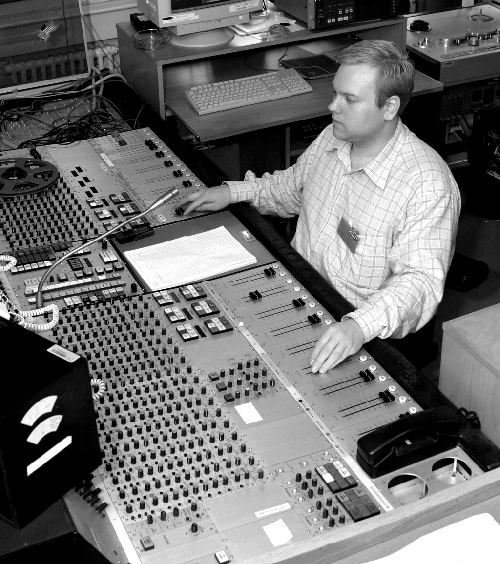
Photo: Unknown, CC BY-SA 3.0, via Wikimedia Commons
At 6.40pm on a Tuesday in November, the back room of a Brighton pub two streets up from the seafront is still a dining room. Chairs are stacked against the wall, a mop is out, and the kitchen is pushing its last orders through the pass. By seven it will be a venue. By half nine it will be a small, warm, slightly chaotic classroom with a bar.
Mia is twenty-four and this is her first solo night on the desk. She has done a few festival shifts, a couple of pub gigs as a second pair of hands, and one wedding where the ceilidh band brought their own engineer. Tonight she has two microphones, one DI box, a borrowed foldback wedge and a handwritten channel list that is already out of date.
The 6.40 Load-In
The landlady, Fiona, is also the stage manager, the door staff and the person who knows where the gaffer tape lives. She puts a mug of tea on the corner of the stage and says the thing every first-time engineer needs to hear: 'Nobody in this room is reviewing you. They just want to hear the songs.'
Dan, who has been mixing in Brighton pubs for longer than Mia has been gigging, is here because Tuesday is the night he mentors. He does not take over. He stands at the back, arms folded, and lets her patch the desk. When she plugs the vocal mic into the wrong channel, he waits a full thirty seconds before saying, quietly, 'Talkback is your friend.'
This is the Tuesday test. Not a formal scheme, not a course, just a habit that has grown in Brighton's smaller venues: a midweek night where the stakes are low, the room is forgiving and the more experienced crew make space for someone to learn. The bands are usually local, the door is usually a fiver, and the audience is usually small enough that a feedback squeal is a shared joke rather than a disaster.
Where the Mistakes Are Allowed
The first act arrives at ten past seven with a broken guitar lead and a pedalboard that looks like it has been assembled by a very enthusiastic child. Mia finds a spare lead in the venue's drawer of useful things. Dan shows her how to check it with a multimeter, then lets her do the second one herself.
Soundcheck is where the real learning happens. The singer wants 'more me' in the foldback. The guitarist wants less. The drummer wants nothing at all, which is unusual and welcome. Mia pushes the vocal too hard and gets a low, rolling hum. She panics. Dan says, 'Pull the gain, not the fader,' and she does, and the room settles.
By eight fifteen the stage is set: two mics, one DI, a borrowed monitor, a chalkboard setlist and a pint of water that someone from the kitchen has put on the amp. The kitchen is still open. The smell of chips and vinegar drifts through the room. A couple at the front table ask if they can keep their seats. Fiona says yes, as long as they do not mind sharing the room with a band.
Chips at Half Nine
The first act goes on at eight forty-five. Mia is nervous for the first two songs, then forgets to be nervous because she is too busy listening. She forgets to unmute the vocal channel on the third song. The singer looks at her, eyebrows raised, and Dan makes a small gesture with his hand. She finds the button. The room claps. The song continues.
This is the point of a Tuesday. On a Friday, with a hundred and fifty people in and a promoter watching the door, that mistake would feel like a failure. On a Tuesday, with thirty people and a plate of chips waiting for her at the end of the set, it is just a thing that happened and got fixed.
The kitchen sends out a plate of chips at half nine. Fiona puts it on the desk next to the faders and says, 'Eat. You have another two bands.' Mia eats one chip, then another, and realises she has not sat down since six.
Second act is a three-piece with a cello. Mia has never mic'd a cello before. Dan shows her where to point the mic, how far back to stand, and how to resist the urge to add reverb to everything. The third act is a solo singer with a loop pedal who wants a lot of reverb on everything. Mia gives her some, then takes some away, then finds the right amount.
The Last Bell Is the Debrief
The last set ends at ten past eleven. The bar is doing last orders. Fiona is stacking chairs. Mia is coiling cables. Dan appears with two half-pints and a beer mat covered in biro notes: pull the gain before the fader, check the lead before you blame the guitar, and always know where the house music volume lives.
'You passed,' he says. 'There is no certificate. But you passed.'
Mia laughs. She is tired and wired and already thinking about next Tuesday. The pub is quiet now, just the sound of the glasswasher and the last few people finishing their drinks. The stage is a corner of a dining room again. The chalkboard has been wiped clean.
What Brighton gets from nights like this is not just a new engineer. It is a stronger local scene: bands who know they will be looked after, landladies who know they can trust the desk, and a pool of people who can step in when someone is ill or double-booked or simply having a bad night. The Tuesday test is not about passing. It is about being allowed to fail in a room where the worst outcome is a feedback squeal and a round of sympathetic applause.
And then, if you are lucky, a plate of chips.